Half an hour later, I was beginning to think the bus stop wasn’t working. Then, a couple of local Uzbek youths joined me. I told them I’d come here in search of the Koryo-Saram history, but they didn’t care much, or just didn’t understand my Russian. They were an energetic and patriotic bunch. “Otkuda?” (“Where are you from?”) one of them asked. When I said I came from Australia, they bantered that Uzbekistan was the number one country and it had the best athletes and armies. A few minutes later, a bus arrived. As the darkness streamed past the bus window, I felt my search for a piece of Koryo-Saram history had come to an end. The months I had spent learning Russian were worth it just for the few words I was able to exchange with Viktor. Not quite the way I imagined, but I caught a glimpse of an unprocessed reality. I left the once-mysterious Politatel behind, feeling more lighthearted than bittersweet.
The bus crossed the Chirchiq River and dropped me off at the Qu’yliq station at around 7:30PM. It was still too early to go to the airport because my flight wasn’t until 3:20AM. I headed to the center of Tashkent to see what it was like at night. After a short ride in a modern subway, I transferred to the Soviet-built subway line. I was headed to Alisher Navoiy, which was in a fancier part of Tashkent. The old subway car, whooshing and screeching, crossed the underground of Tashkent through the familiar stations in a hurry. It rushed through the brutalist columns and unvarnished walls of Mashinasozlar, the ornate astronaut murals at Kosmonavtlar, and eventually arrived at Alisher Navoiy with its awe-inspiring arches and domes adorned with Islamic-inspired traditional styles. Not far away from all the splendors of the half-century-old Soviet architecture, there was a slick tunnel that led to a shopping mall. The scenery couldn’t have changed more quickly.
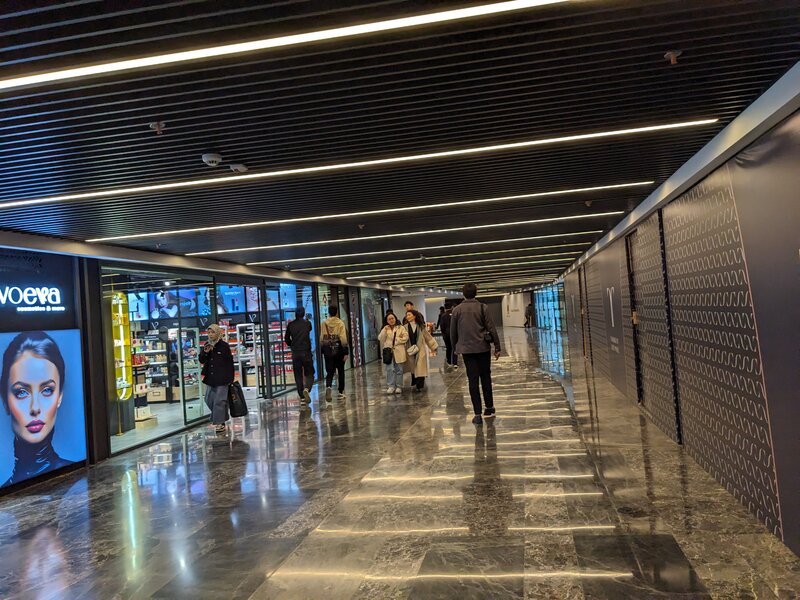
The monumentalist structures and traditional patterns abruptly gave way to luxurious and trendy storefronts with glossy windows. Walking on the bright marble floor, I wasn’t even sure whether I was in the same city anymore. Everything was as expensive as it looked fancy. My small hope of maybe buying a warmer jacket before going to the Caucasus evaporated quickly as I checked the price tags inside those stylish stores. Who could afford those clothes was a mystery, as they easily cost many times my train ride from Bukhara to Tashkent. The mall was busy though, and even all the pricey restaurants were packed with diners. I was hungry but didn’t want to eat there.
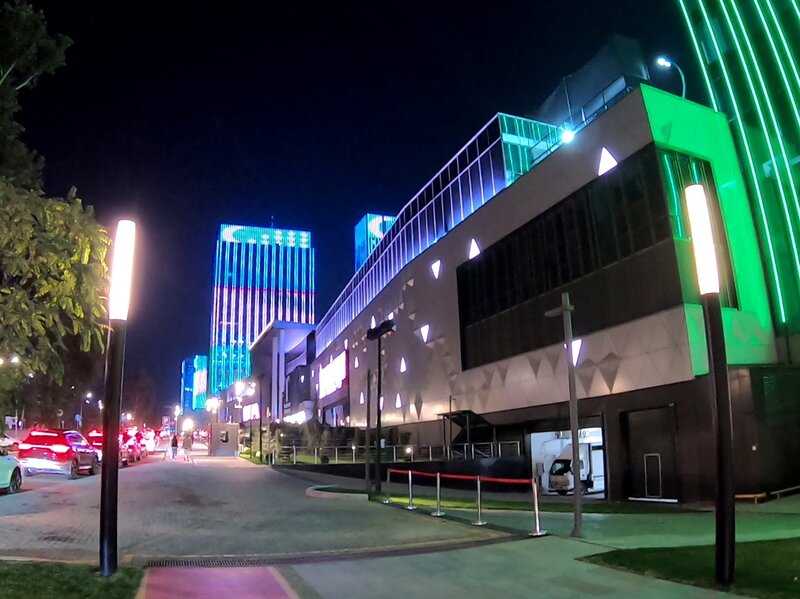
Strolling past those swanky storefronts with my huge backpack and beat-up clothes, I couldn’t help but feel out of place. Everyone around me looked so sharp and fresh compared to me, who hadn’t even had a chance to take a shower or shave since leaving Samarkand almost two days earlier. Priced out, I walked out of the posh shopping mall and found myself on even fancier streets filled with stylish foreign cars. There were some interesting things to check out–a nice park with sculptures and nearby buildings brightly illuminated with the pattern of the Uzbekistan flag. But it was too cold to be walking around, and I was exhausted from being out all day since 6:00AM. The hardest thing about not having accommodation wasn’t the physical fatigue, but not knowing where to go. I figured I’d just have to wait it out at the airport. I rushed to the nearby Pakhtakor station to escape the cold and got on a subway.
It was already 9:00PM when a subway and bus ride got me to the airport. The check-in area was full of people and there was nowhere to sit down or rest. Since my flight to Baku wasn’t even showing on the boarding screen, there was nothing to do but stand around awkwardly. Not having eaten anything since the Koryo-Saram restaurant at Kim Pen Khva Kolkhoz, I was craving some simple shashlik. But there weren’t many restaurants at the airport, let alone any that served shashlik. So I took a cab to a nearby neighborhood about ten minutes away. But the shashlik place I wanted to go to was permanently closed when I got there. It was too freezing to find another cab or a restaurant. So I just had dinner at a nearby place, which was one of the most expensive meals of the trip, costing 149,000 sum ($17.50). It was more than a night in a hostel, but I was too cold and exhausted to think about all that.
When I came back to the airport, the place had only become more crowded despite how late it was getting. With some luck, I managed to snag a middle seat on a bench near the glass window overlooking the parking lot outside. By this time, my flight was at least showing up on the boarding screen, but the check-in time still hadn’t been announced. Looking at all the destinations on the screen, I tried to reflect on my time here in Central Asia, but my mind was preoccupied with the looming challenge. There were only twelve days left until I had to be in Seattle, meaning I had even fewer days left to reach Dublin.
Was it even possible? I didn’t know for sure, but I at least stood a chance if I could get to Istanbul in the next few days. Maybe the trains in Europe would be straightforward to navigate. How I would get to Istanbul, I wasn’t sure. The noise of the crowd faded into the background as I fell into a light sleep. For the next few hours, I kept sleeping uncomfortably for around twenty minutes, then waking up for a few minutes, checking the boarding screen with drowsy eyes before falling asleep again. It was around midnight when an Uzbek babushka woke me up with a slight nudge. I didn’t understand what she was saying, but it sounded like she wanted the seat. I looked around and realized that the airport was still full and the check-in for my flight was going to open pretty soon. I offered the seat to the babushka and walked around the airport like a zombie. Soon, the check-in started for the Baku flight and a massive line formed.
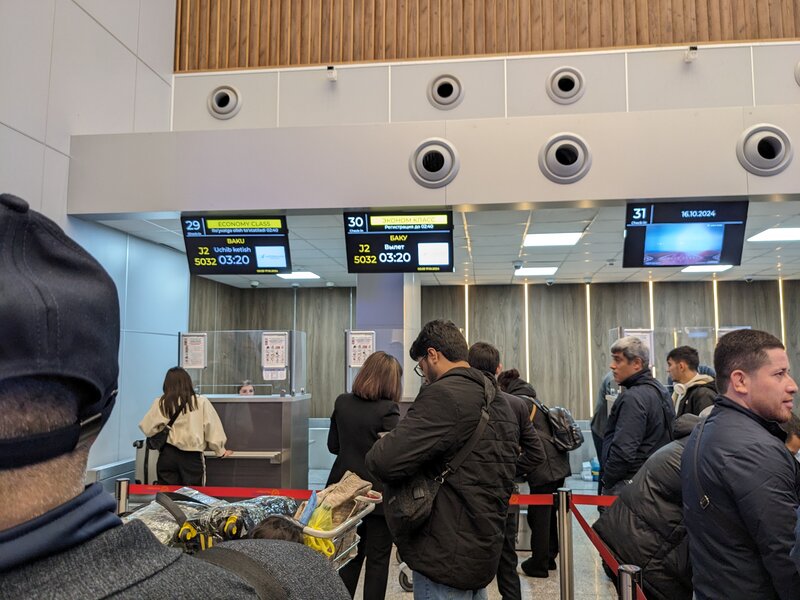
The lines at check-in and immigration moved slowly, and I followed along in a daze. I was tired but awake. When I left China a few days earlier to head to Central Asia, I hadn’t even known it was possible to get to this point. It felt almost surreal to be concluding my time in Central Asia. I knew there was no room for a vague hope because the road ahead was still not clear, but my heart started pulsing with excitement and conviction. I might just make it to Dublin, not sure how, but I might.
A regret also reared its head as I boarded the plane. Should I have crossed the Caspian Sea by boat or traveled around it on land? Taking the easy way didn’t feel right. But who knows? Maybe one day, I’d take the long way back home from Seattle. As soon as I sat down, I fell asleep and didn’t even notice the take-off. I slept like a baby, without the faintest idea that among the passengers was a friend with whom I’d share an unexpected trip later.